
By Travis Dodds, Physiotherapist and Founder of Lift Clinic
In my practice as a Vancouver Physiotherapist, I hear a version of this story almost every week. You were sprinting on defense during a summer ultimate frisbee game, stepped on another player’s foot, and went down hard. You heard that sickening “crunch” and spent the next two days hobbling on crutches.
By day three, driven by adrenaline, athletic tape, and a handful of ibuprofen, you tried to get back on the field. The result? A severely swollen ankle that forced you to the sidelines.
But what if this happens: months later, the sharp pain on the outside of your foot might be gone, but the joint still feels profoundly stiff. You might even feel a sharp, intermittent pinch on the inside of the ankle during heavy lifts like front squats, and you can feel that stiffness affecting movement all the way up into your knee. You are stuck in a frustrating limbo: not fully broken, but absolutely not operating at 100 percent.
Here is what I want you to know: you are not crazy, and “just resting it” is not the solution.
TL;DR: The Lift Clinic Approach to Neck Pain
- Ditch the “Walk It Off” Myth: Ignoring a severe sprain leads to fibrotic scar tissue and chronic ankle instability. Individualized assessment is mandatory.
- Clear the Fluid, Restore the Glide: Lingering swelling physically blocks your joint and inhibits your muscles. We use manual therapy and edema management to restore your ankle’s mechanics.
- Keep Training (Intelligently): You do not have to stop lifting. Our Strength & Conditioning team will rebuild your full-body capacity so you emerge stronger than before your injury.
If you are currently dealing with a stubborn injury that just will not clear up, do not wait. Book your initial Physiotherapy assessment today and let us get to the root of the problem.
The Danger of the "Walk It Off" Mentality
Ankle injuries are extremely common. Because almost everyone has rolled an ankle at some point, there is a pervasive “it is just a sprain, walk it off” mentality ingrained in sports culture.
This is incredibly dangerous. No two ankle sprains are the same. Treating a severe ligament tear and bone compression as a minor inconvenience is a fast track to chronic ankle instability—a condition where your ankle repeatedly gives out, limiting your ability to hike the North Shore trails or confidently change direction on the field. Individualized assessment and treatment are non-negotiable if we want to prevent recurrent damage.
The Science of the "Stuck" Ankle
When you forcefully roll your ankle, the damage goes deeper than just stretched ligaments on the outside of the joint.
During a severe inversion sprain, the talus (the lower ankle bone) violently compresses against the shin bones. This causes deep bone bruising and sometimes the development of subchondral cysts. While soft tissue can heal relatively quickly, full resolution of this deep bone trauma can take up to six months.
Simultaneously, the initial soft tissue trauma triggers inflammation. If not managed correctly, this inflammation leads to arthrofibrosis—the formation of fibrotic, contractile scar tissue within the joint capsule. These adhesions physically block your functional range of motion.
Furthermore, swelling and scar tissue alter your arthrokinematics (how the bones glide over one another). Specifically, your talus loses its ability to glide backward as your shin moves forward. This hypomobility is exactly why your ankle feels blocked when you try to squat deep or walk down stairs.
A Note on Cartilage: When Patience is Required
As a sports-oriented Vancouver Chiropractor and Physiotherapy clinic, our philosophy is generally aggressive: we want to give you the green light to be active as early as possible. However, there is a critical exception.
Sometimes, that deep, aching pain inside the joint is an Osteochondral Lesion of the Talus (OLT)—actual damage to the cartilage and underlying bone. OLTs are frequently overlooked in general practice. While we love early activity, suspected OLTs require careful, patient monitoring and progression.
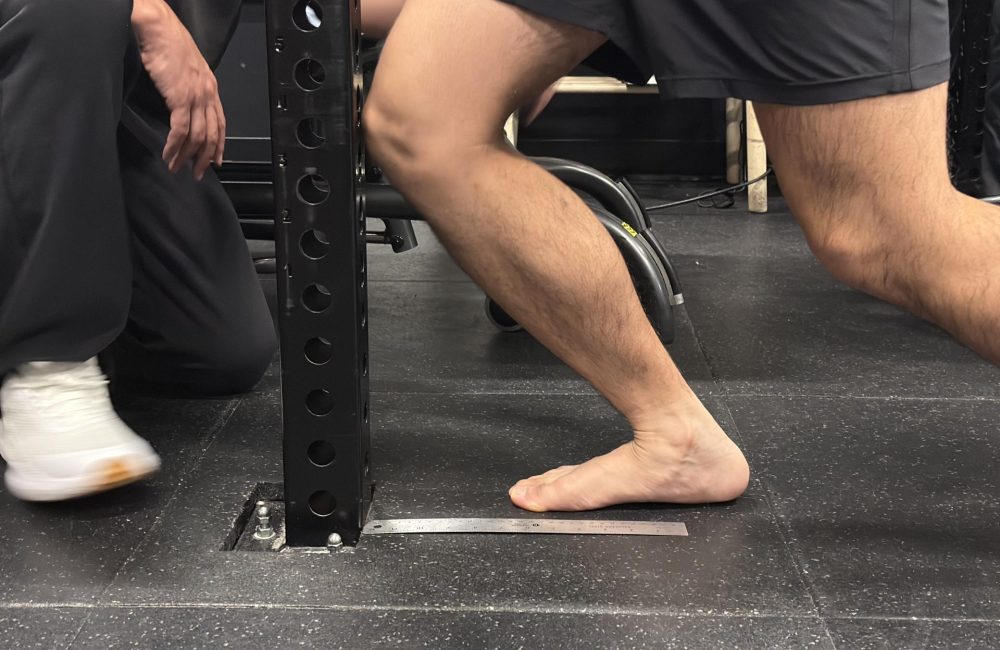
When a client walks into Lift Clinic with this presentation, we start with objective measurement. We often compare a healthy, uninjured ankle—which might easily achieve a 15 cm score on the knee-to-wall test—against the injured side, which might be severely restricted at just 3 cm and eliciting a pinching pain in the front of the joint.
To fix this, we use a collaborative, hands-on approach:
- Manual Therapy: We use traction mobilizations (gently pulling the talus down) and anterior-posterior glides to actively clear space within the joint, breaking up adhesions and restoring proper biomechanics.
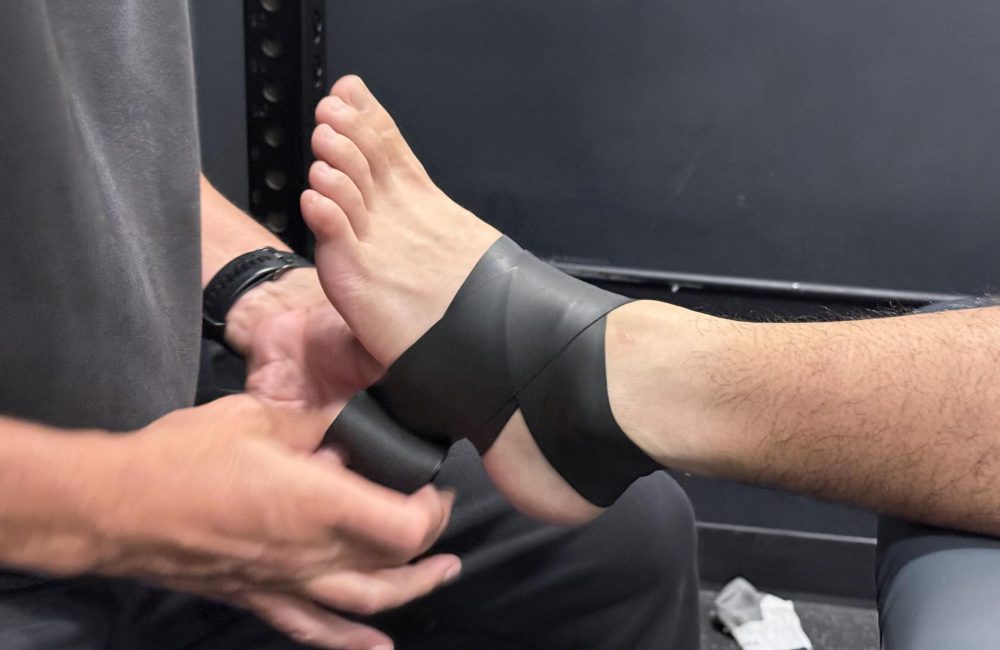
- Edema Management: Residual fluid physically blocks your range of motion. We utilize strategies like contrast baths (alternating hot and cold water to leverage hydrostatic pressure) and compression wrapping (voodoo flossing) combined with movement to actively push stubborn fluid out of the joint space.
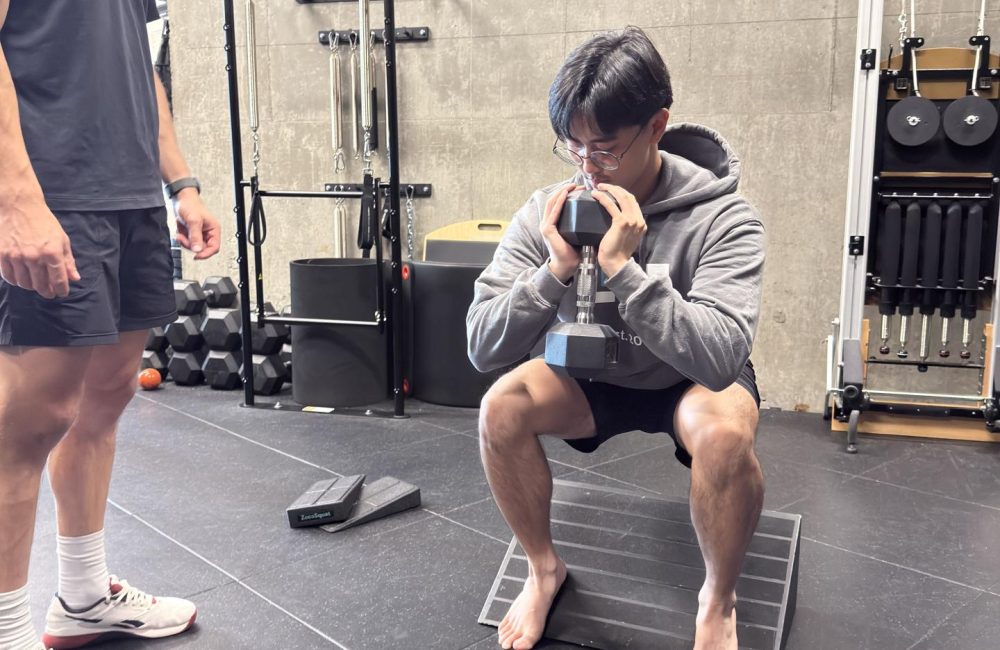
If there is one thing I want you to take away from this post, it is this: an injury does not mean you have to stop training.
In fact, one of the most critical components of our interdisciplinary approach is our Personal Training and Strength & Conditioning team. If you cannot do your normal sports or outdoor activities, it is a massive shock to your system. We do not want you staying home, losing your hard-earned fitness, and dealing with the mental toll and depression that often accompanies an injury.
Instead, our strength coaches redesign a head-to-toe training program for you. The goal is to build sport-specific tissue capacity so that when your ankle is finally ready for the field, the rest of your body is stronger and more resilient than ever before.
The "All-You-Can-Eat" Sprint Metaphor
While we want you lifting, we must respect the state of the joint. Expecting a swollen, fluid-engorged ankle to handle aggressive, high-impact loading (like sprinting or box jumps) is a bit like trying to win an Olympic 100m sprint right after stuffing yourself at an all-you-can-eat buffet.
When your joint is that “full,” gentle movement works wonderfully; aggressive movement will backfire.
This is why we focus on activity modification rather than cessation. We will have you utilizing heel wedges to modify your squats and deadlifts to a manageable load (roughly a 4 or 5 out of 10 effort). We will swap high-impact jumping for low-to-medium resistance cycling to promote fluid movement without the excessive force.
Recovery is a journey. By respecting the biology of bone bruising, aggressively managing fluid, and intelligently loading the rest of your body, we can help you regain the proprioception and tissue capacity required to sprint, jump, and confidently get back to the sports you love.
Ready to Move Past the Pain?
Whether you are navigating the frustrating aftermath of an acute injury, or you are healthy and looking to bulletproof your body for the upcoming season, our collaborative team is ready to help.
Ready To Start Moving Better?
Currently in pain or injured? Stop waiting for it to just go away. Book your initial Physiotherapy or Chiropractic assessment so we can map out your recovery.
Pain-free but seeking peak performance? Ensure your body is resilient enough to handle your lifestyle. Book a free 30-minute Strength & Conditioning consult to build your customized training plan.
