
By Travis Dodds, Physiotherapist and Founder of Lift Clinic
In my practice, one of the most frustrating things I hear from runners is the story of an incredible race day derailed by sudden, paralyzing muscle cramps. I recently worked with a runner who experienced severe cramping during a half marathon along the Seawall. It was so intense they were legitimately worried they would tear a muscle by pushing through to the finish line.
When this happens, almost everyone’s first instinct is to blame hydration, down a sports drink, or reach for a banana. But if you consistently struggle with cramping despite a solid nutrition plan, you might be missing the real issue. Sometimes, to become a better, more efficient runner, we need to look beyond the fuel and examine the engine. If we can find the root cause and build your tissue capacity, maybe you can leave the pickle juice in the pickle jar.
TL;DR: The Quick Summary
- It is not just about salt: Modern research shows that mid-run cramps are often a nervous system issue driven by premature muscle fatigue, not just dehydration.
- The whole body matters: A stiff lower back or weak glutes can force your hamstrings and calves to overwork and eventually cramp.
- You need the right kind of strength: Smart, sport-specific strength training won’t make you “strong and slow.” It makes you strong, flexible, and highly efficient.
The Science of Cramping: Moving Beyond Electrolytes
For decades, the dominant theory was that exercise-associated muscle cramps were caused purely by dehydration and electrolyte depletion. While fluid balance certainly matters, this theory does not explain why cramps often occur in mild Vancouver weather, or why they tend to isolate in specific, heavily used muscles like the calves or hamstrings.
Over the last several years, the science has shifted toward the “Altered Neuromuscular Control” theory. In plain English, cramping is often a nervous system misfire caused by premature muscle fatigue.
When a muscle is pushed beyond its current capacity and becomes exhausted, the communication between your spinal cord and that muscle starts to break down. The receptors that tell your muscle to contract (muscle spindles) become hyperactive, while the receptors responsible for telling the muscle to relax (Golgi tendon organs) fail to do their job. The result is an uncontrolled, painful muscle spasm. To prevent this, we need to delay the onset of that premature fatigue.
The "Wiggling Pyramid" of Biomechanics
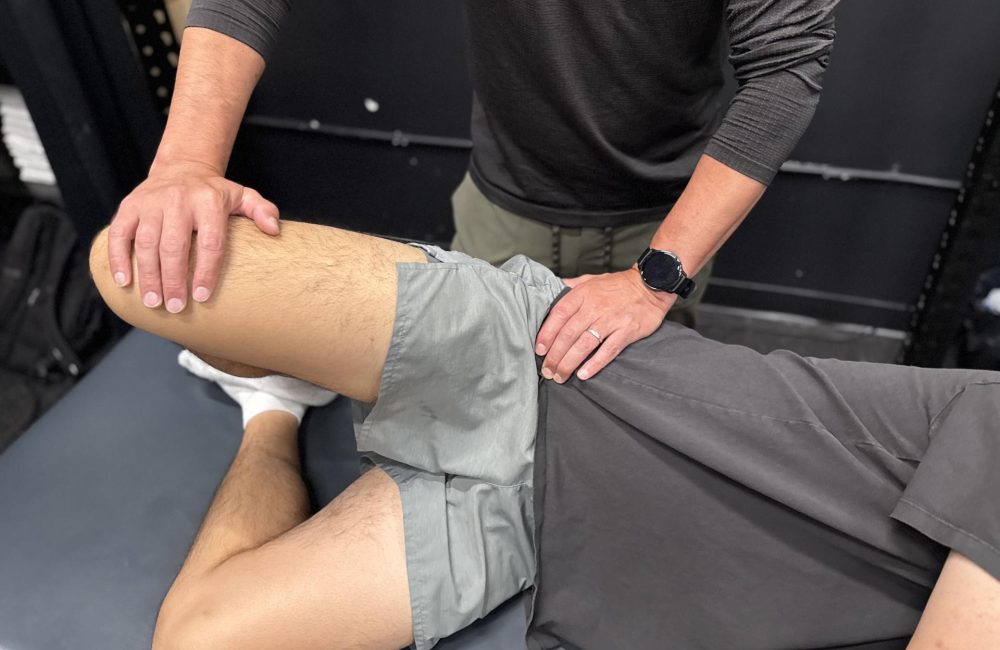
As a Vancouver Physiotherapist, I always look past the specific muscle that cramped to assess the entire kinetic chain. We want to do a head-to-toe Running Assessment to look for areas of weakness or stiffness that make your energy metabolism inefficient.
My favourite analogy to use in the treatment room is the human pyramid. Imagine a cheerleading pyramid where the people in the middle are wiggling all around. It would get incredibly tiring for the people at the very bottom who have to hold everything up.
Your body works the exact same way. Better strength and mobility through the trunk and hips ensures that the legs have optimal efficiency and power. Without this, muscles further down the chain—like your hamstrings or calves—have to work overtime to compensate for the structures above them that aren’t doing their job. A lack of mobility in your trunk, or specific weakness in your glutes and hip flexors, is often the true culprit behind lower leg fatigue and cramping.
One of the primary barriers to best-practice care is that many runners only run. They do not have a positive relationship with strength training, often because they view it simply as a way to bulk up. They worry that lifting weights will make them stiff, heavy, or slow.
The reality is that not all strength training is created equal. Depending on the programming, you might get strong and slow, strong and inflexible, or—if done correctly—strong and flexible.
This is where a highly nuanced approach is required to build muscle in a way that optimally benefits running, enhances overall mobility, and respects the specific energy systems your sport demands. It is about building a body that can handle those long, rainy-day training runs on the North Shore trails without breaking down.
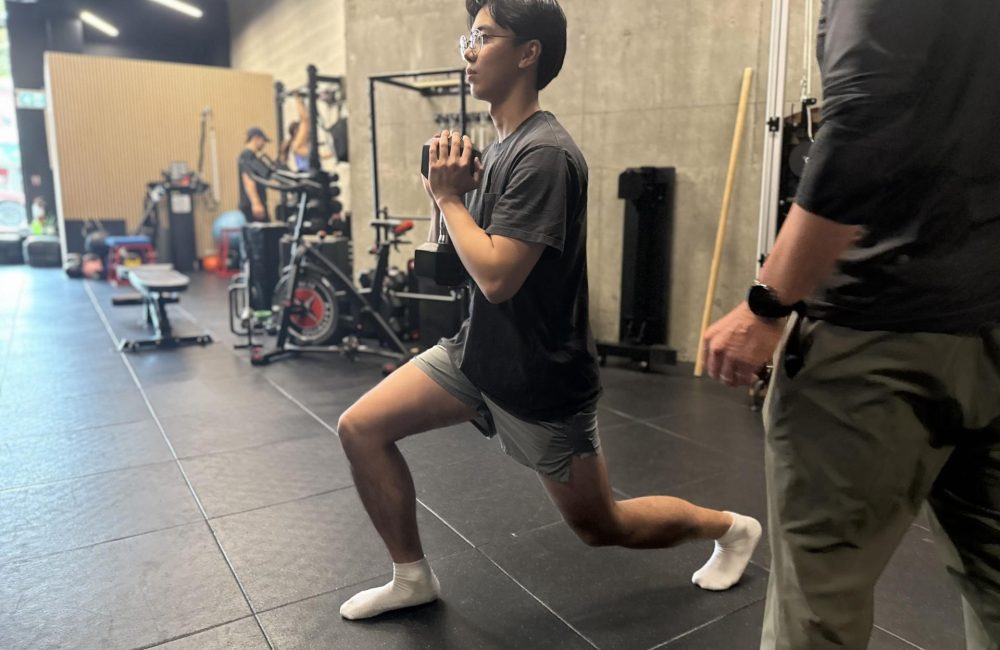
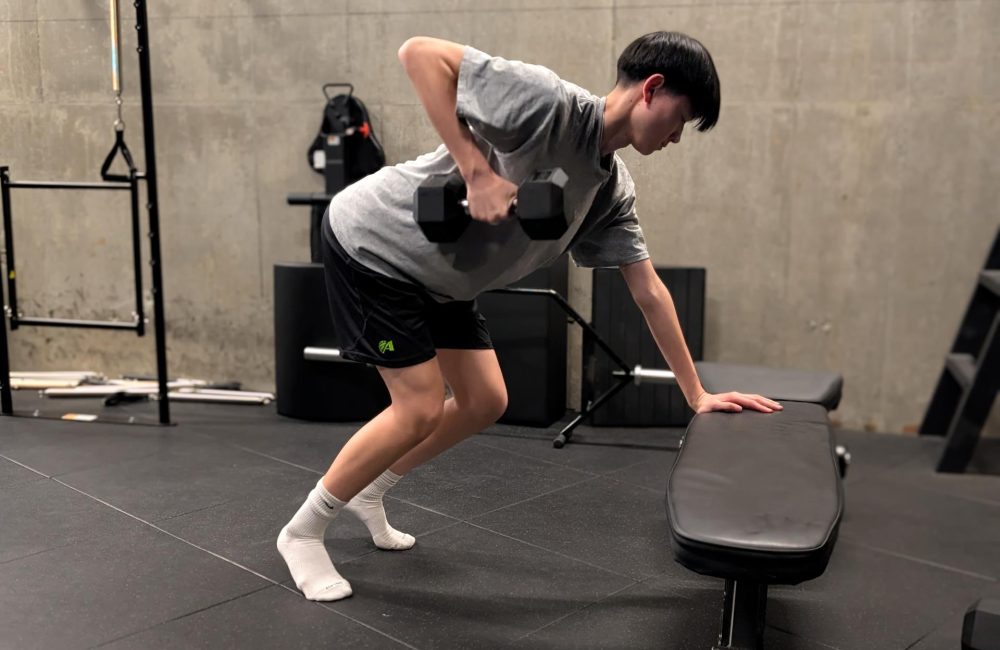
No two practitioners are the same, but at Lift Clinic, our philosophy is to always assess the immediate local issue as well as the root cause. If you come in for Physiotherapy or Chiropractic care, we will work to address the pain, improve your mobility, and correct the immediate biomechanical deficits. We might also utilize targeted soft tissue techniques or collaborate with our Massage Therapy team to help calm down an overworked, cramp-prone muscle.
But for recurring issues like running cramps, the true magic happens when we team up with our Vancouver Personal Trainer and strength and conditioning (S&C) team.
Our S&C coaches hold bachelor’s or higher-level degrees and are Certified Strength and Conditioning Specialists (CSCS). They have undergone extensive mentorship and have substantial experience working with a wide range of injured and healthy athletes. By collaborating directly with your clinical team, our coaches can help you push well beyond just addressing glute weakness. They will guide you through legitimate, science-based, periodized performance training so you can peak for your events and achieve race-day results you didn’t imagine were possible.
Stop Treating the Symptom
If you are tired of your calves locking up on race day, it is time to look at the whole picture. By addressing the stiffness in your kinetic chain and building sport-specific strength, you can delay muscle fatigue, calm your nervous system, and finally run to your true potential.
Ready to get to the root of your running injuries and movement limitations?
Ready To Start Moving Better?
Currently in pain or injured? Stop waiting for it to just go away. Book your initial Physiotherapy or Chiropractic assessment so we can map out your recovery.
Ready to bridge the gap from rehab to peak athletic performance?
